CASE STUDY
Baron Solar
How a cohort of Microsoft suppliers brought new clean energy to rural North Carolina
Video by Slalom
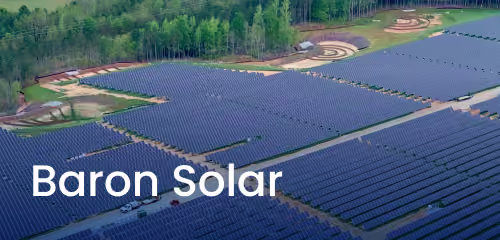


Supplier sustainability requirements often arrive before a clear path to meet them exists
Many large companies are extending their climate commitments into their supply chains. Microsoft requires select suppliers to transition to 100 percent carbon-free electricity for goods and services provided to Microsoft by 2030, and other enterprises are building similar expectations into their own codes of conduct. For most large companies, Scope 3 emissions, those generated across their supply chains, represent the largest portion of their total emissions inventory.
For the companies on the receiving end, the intention behind these requirements is usually clear. What to do about them is often not.
The first option most suppliers encounter is spot-market RECs. They are cheap, easy to procure, and increasingly difficult to defend as certificates retired from projects that were already built and financed years before the purchase, with little connection to anything new added on the grid. The other options, power purchase agreements (PPAs) and virtual PPAs, require a load size and financial complexity that most mid-market companies simply cannot support. A mid-sized company with a few hundred employees and a handful of office locations doesn't fit that profile, and their procurement options can feel limited.
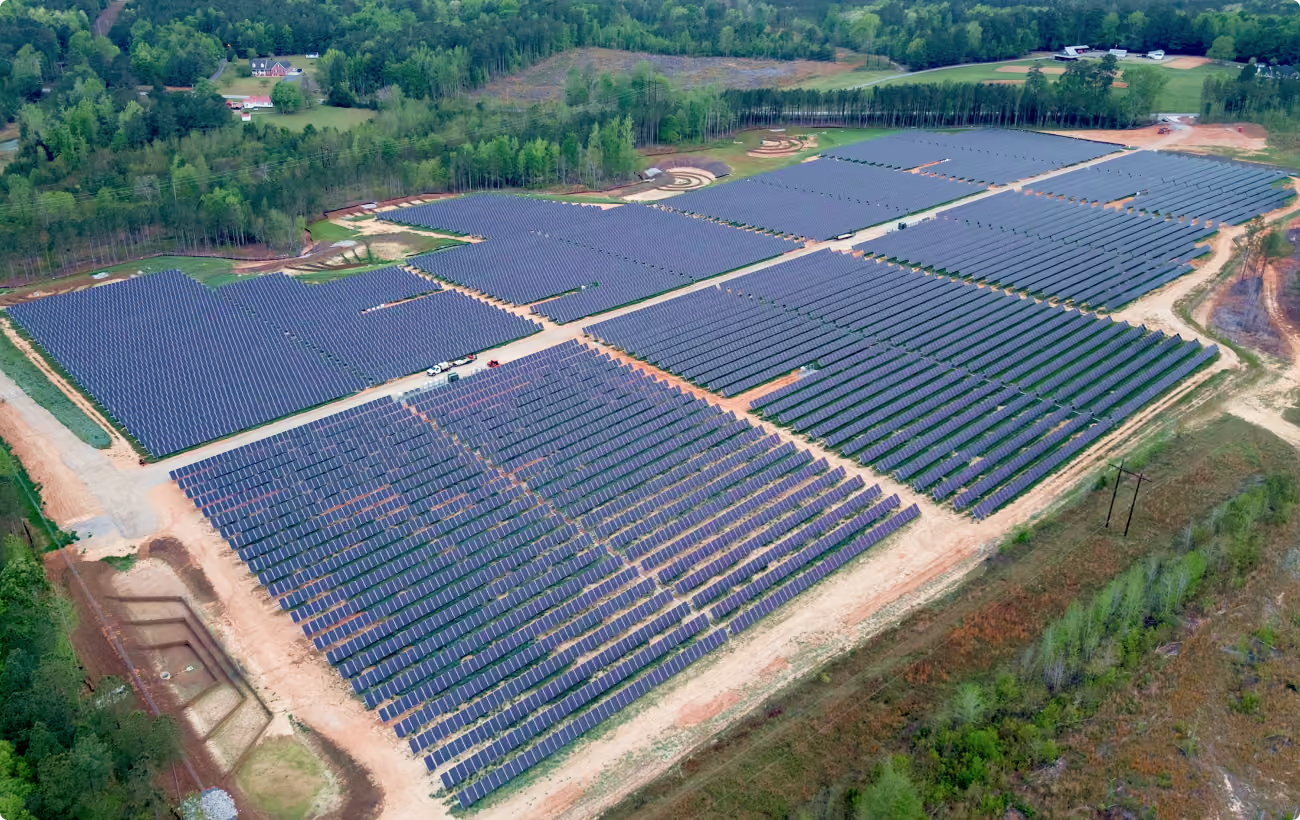
Baron Solar - 5MW facility
There is an accessible path for suppliers under pressure from their largest buyers
In April 2026, a cohort of eight Microsoft suppliers, including Slalom Consulting, Centific Technologies, ImagiCorps, IP House, BDA, Eleven 11 Solutions, TASA Analytics, and Visionet Systems, signed long-term contracts for High-Impact RECs through Ever.green. Each of these suppliers were working towards meeting the same CFE requirement but their electricity footprints were too small to anchor to a project on their own. Ever.green enabled each company to commit to a volume that matched what they actually needed and together, their combined commitment gave developer, Headwater Energy, the contracted revenue needed to reach financial close on Baron Solar, a 5 MW project in Anson County, North Carolina.
"Ever.green was designed specifically to make this kind of collective action possible," said Liz Pearce, Chief Revenue Officer at Ever.green. "Slalom and the other Microsoft suppliers are ideal examples of corporate buyers driving real community impact because it's to their own benefit, as well as the interest of their clients, employees, partners, and other stakeholders."
Fractional commitments from multiple buyers can collectively enable projects that a single buyer cannot. For each participating supplier, the result is a long-term REC contract tied to a specific project.

“Baron Solar is a great example of how innovative contracting structures can unlock projects that might not otherwise move forward. By working with Ever.green and this group of committed buyers, we were able to secure the revenue certainty needed to bring this project to life.”

Myles Watson
Chief Operating Officer
Headwater Energy
Supplier programs can drive real additionality with the right infrastructure
Supply chain sustainability requirements are only as meaningful as the infrastructure available to meet them. When the credible paths to compliance assume scale that most suppliers don't have, requirements produce purchasing activity rather than impact.
For large companies designing supplier sustainability programs, Baron Solar is evidence that requirements can drive genuine additionality when the infrastructure exists to aggregate supplier demand and route it toward projects that need it. For suppliers navigating those requirements, there is a path that enables impactful procurement your stakeholders can stand behind.
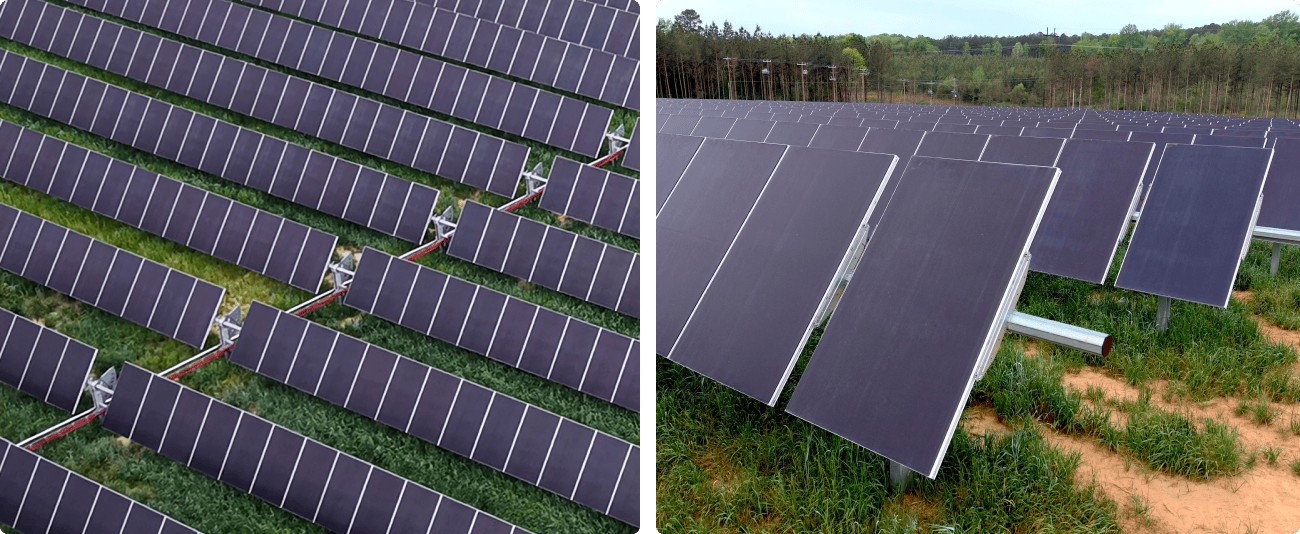
Baron Solar - First Solar thin-film panels made in USA

“We're a consulting partner to thousands of clients, and we are deeply embedded in their supply chains, so we realize our environmental footprint extends well beyond our Slalom office doors. What that means is our choices impact their choices. Because of that, we're committed to 100% renewable energy by 2030, and this solar project in North Carolina is a big part of that commitment.”

John Poling
Managing Director, Client Leadership, Carolinas
Slalom
The project delivers lasting economic and environmental benefit to a rural community
Anson County is a rural community of about 22,000 people, 45 miles southeast of Charlotte, where the median household income sits 37 percent below the national median and the poverty rate is more than double the national rate. Headwater had identified a viable site there with strong solar resources, an approved interconnection, and community support. What the project lacked was contracted revenue, and without it, lenders wouldn't move.
Projects like Baron are often difficult to bring to market. Many small and mid-sized solar projects face a common structural challenge. While the economics may work on paper, lenders typically require significant contracted revenue before financing construction. Without committed buyers, otherwise viable projects can stall before reaching financial close.
Baron Solar, the 5MW facility is now operating and delivering clean electricity into the regional cooperative system serving Pee Dee Electric, adding generation with no fuel cost and contributing to a more stable long-term energy supply for the surrounding community. The project avoids roughly 7,810 metric tons of CO₂ annually, equivalent to removing approximately 1,820 cars from the road each year. Built with domestically manufactured panels and local labor, it generates property tax revenue flowing directly to county schools, emergency services, and public infrastructure.
Rural, low-income communities are where developers face the steepest climb to financial close, and they are almost never where spot-market REC purchases land. Long-term, premium REC contracts are structured to move project economics in ways that lenders recognize.
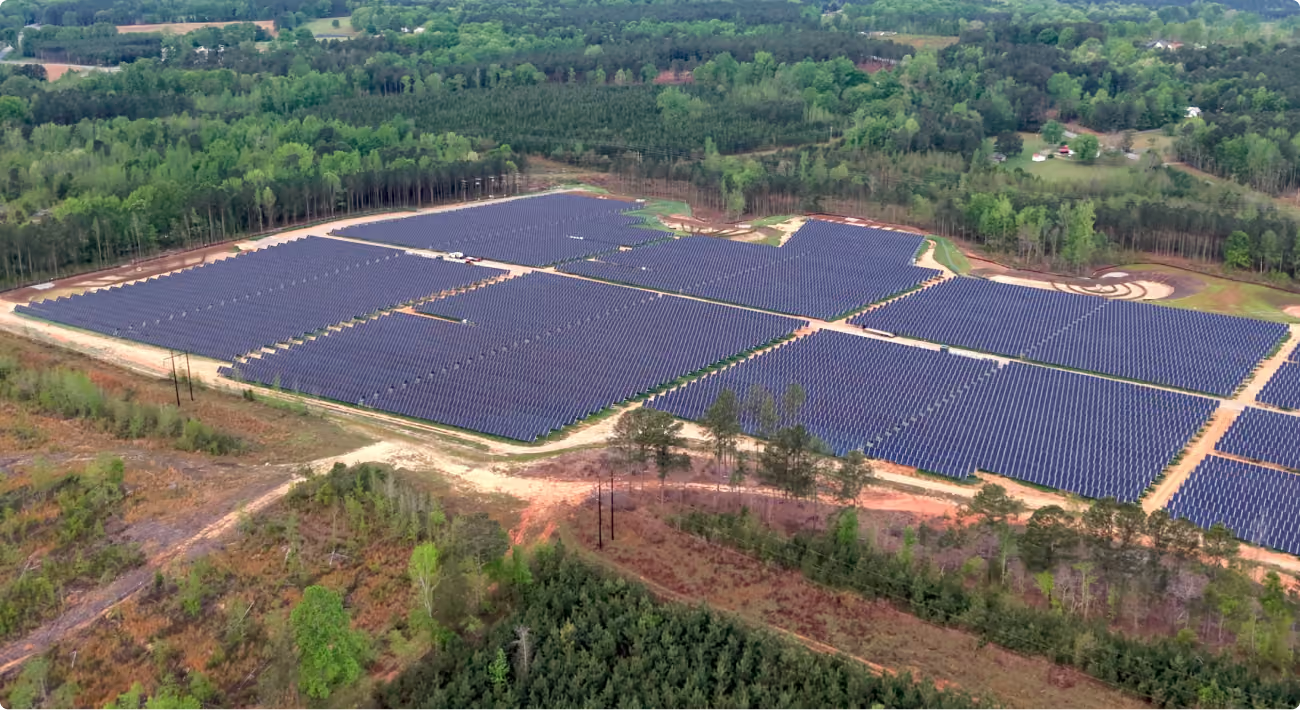
Baron Solar - aerial view
Published: July 2026
If you are a supplier looking to meet Microsoft's CFE criteria, get in touch with our team.
Ever.green is the trusted marketplace for High-Impact RECs & clean energy tax credits.
Ever.green’s dedicated team of renewable energy advisors will support you from start to finish to help maximize your team’s impact while minimizing overhead.
Ever.green customer stories
View all
High-Impact RECs

TX

Wind
Ocotillo Refurbished Wind
Ever.green brought together 14 impact-driven organizations of all sizes to revitalize an aging wind farm in service of their sustainability goals.
View case studyHigh-Impact RECs
WV

Solar
Solar on Schools
Ever.green aggregated corporate climate commitments to enable rooftop solar for a rural school district, lowering energy costs and creating local jobs.
View case study
Clean Energy Tax Credits
AR
Solar
Ralston Family Farms
Ever.green matched Ralston Family Farms with a buyer and guided the deal from start to finish, making it easy for both sides to benefit from clean energy tax credits.
View case study
High-Impact RECs
Tax Credits
IRA tools
COMPANy


Aligns with: