CASE STUDY
Solar on Schools in West Virginia
How Ever.green aggregated corporate climate commitments to enable rooftop solar for a rural school district, lowering energy costs and creating local jobs
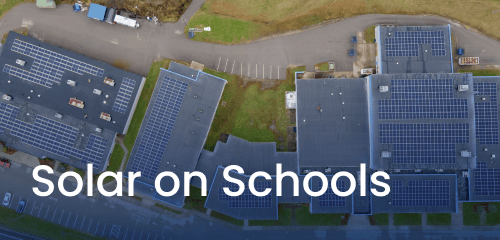


Every dollar spent on energy is a dollar not spent on students
For generations, coal mining powered both the American economy and local livelihoods. Wayne County, West Virginia is deeply rooted in that history. As the energy landscape has shifted and coal jobs have declined, many families and communities have faced difficult economic tradeoffs. Wayne County Schools have felt those pressures acutely. Like many school districts, energy is one of their largest operating expenses after personnel, and one of the least flexible. Rising electricity costs put increasing strain on already tight budgets. Every additional dollar spent keeping the lights on is a dollar unavailable for teachers, classroom programs, and student support. Wayne County Schools began installing solar on school rooftops to stabilize energy costs and redirect savings back into classrooms.
District leaders saw an opportunity to change that equation. By installing solar on school rooftops, they could lower long-term energy costs and redirect savings back into education. The challenge was that solar projects require significant upfront capital, which the district did not have.
Why this school solar project was difficult to finance
To avoid upfront costs, Wayne County Schools chose to pursue a Power Purchase Agreement (PPA) with Solar Holler, a West Virginia-based solar developer. Under a PPA, the developer finances, builds, and owns the solar systems, while the school district purchases the electricity at a fixed, predictable rate over time. The model is straightforward in theory, but difficult in practice. Developers need long-term revenue certainty at a sufficient price to secure financing, while electricity prices must remain low enough for schools to see real savings. In Wayne County, those two requirements did not initially align. The projects penciled out close to viability, but not quite. Without additional revenue, the projects were stalled.
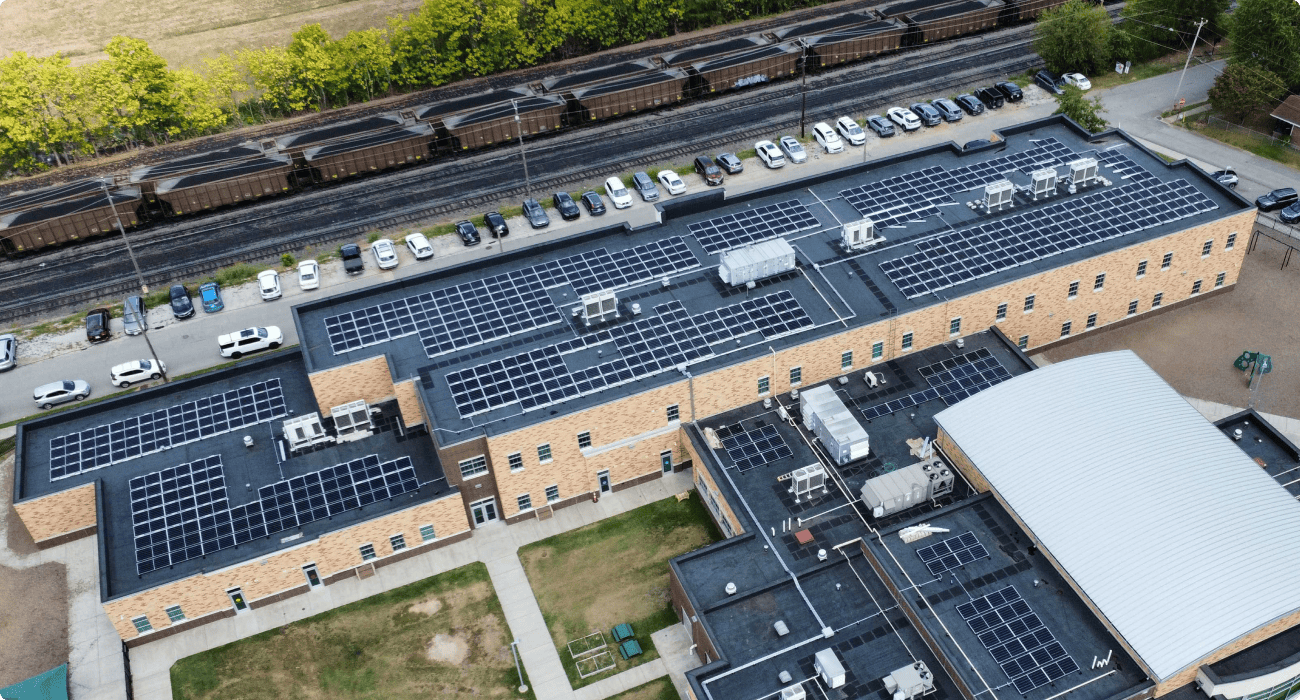
CK Elementary School, Wayne County Solar Holler site
High-Impact REC contracts tip the scales
Corporate climate commitments provided the missing piece. Ever.green aggregated long-term demand from corporate buyers committed to adding new renewable energy to the grid through projects that also deliver measurable community benefits. By entering into long-term High-Impact REC contracts at a meaningful price, these corporate buyers supplied the additional and predictable revenue Solar Holler needed to move the projects forward.
With that revenue certainty in place, Solar Holler could offer Wayne County Schools a PPA rate that generated immediate savings for the district while still meeting financing requirements.

“The contribution from Ever.green is what tipped the scales and made these projects buildable. There are a lot of pieces to the financial puzzle, and having that revenue certainty at exactly the right moment is what got us over the finish line.”

Heather Ransom
Director of Marketing and
Strategic Communications
Solar Holler
This structure works because it aligns the needs of each participant. Corporate buyers support renewable energy projects that add new clean energy to the grid while delivering tangible community benefits. Solar Holler receives premium REC pricing that enables competitive PPA rates without compromising project viability. Wayne County Schools realize immediate energy savings with zero upfront investment.
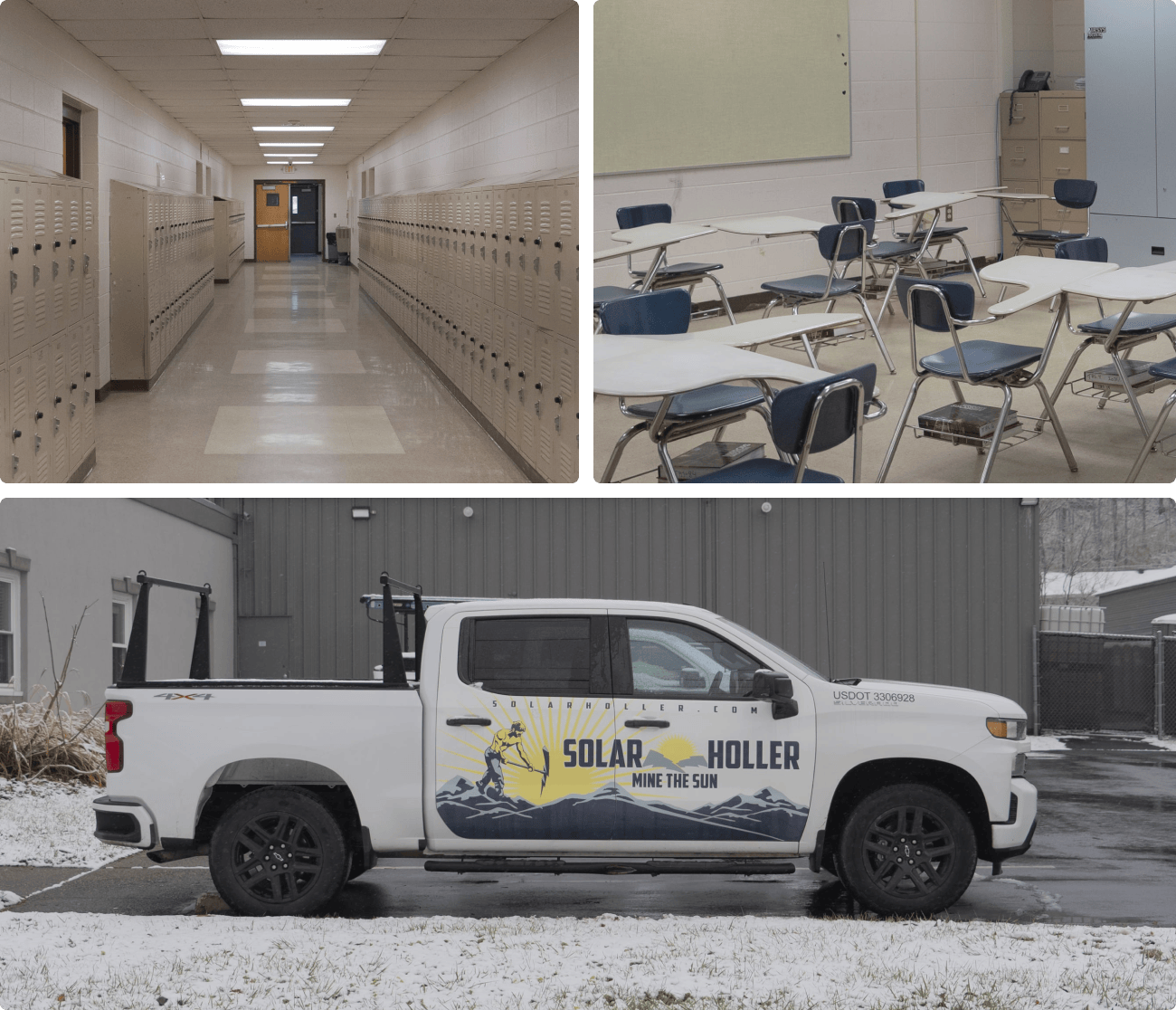
Solar Holler and Wayne County Schools
A community-rooted partnership
Solar Holler is a West Virginia company, deeply connected to the communities where it works. Many staff members graduated from Wayne County schools or have children enrolled there today. Beyond installing solar systems, Solar Holler operates internship and workforce development programs for local high school students, creating pathways into renewable energy careers without requiring students to leave their communities. Between 60 and 80 percent of participants are hired into full-time roles after graduation.
As Solar Holler explains, “a lot of our staff actually graduated from some of the schools in Wayne County, or they have kids attending those schools today. When the opportunity presented itself, it just made sense for us to start here.”
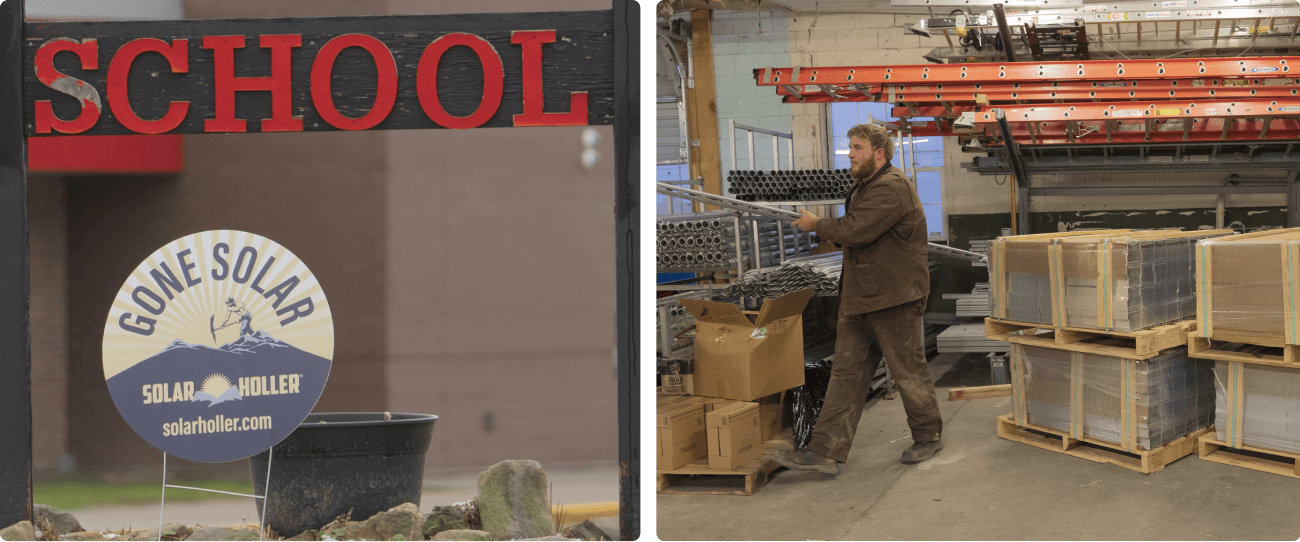
Wayne County Solar Holler site and operations
Turning energy savings into teaching careers
For Wayne County Schools, the financial impact is immediate and measurable. Annual energy savings of approximately $150,000 to $200,000 flow directly back into the district’s operating budget.
“$200,000 a year pays for multiple positions. Over the life of this PPA agreement, it’s going to fund basically two teaching careers.”

Todd Alexander
Superintendant
Wayne County Schools
Across 15 schools, Solar Holler installed 3.2 MW of solar capacity, generating more than 3,750 MWh of clean electricity each year. These projects avoid roughly 2,400 metric tons of CO₂ annually, equivalent to taking about 560 cars off the road every year. The benefits extend beyond emissions reductions and school budgets. The projects created local installation jobs, supported long-term employment in the region, and brought renewable energy directly into daily community life.
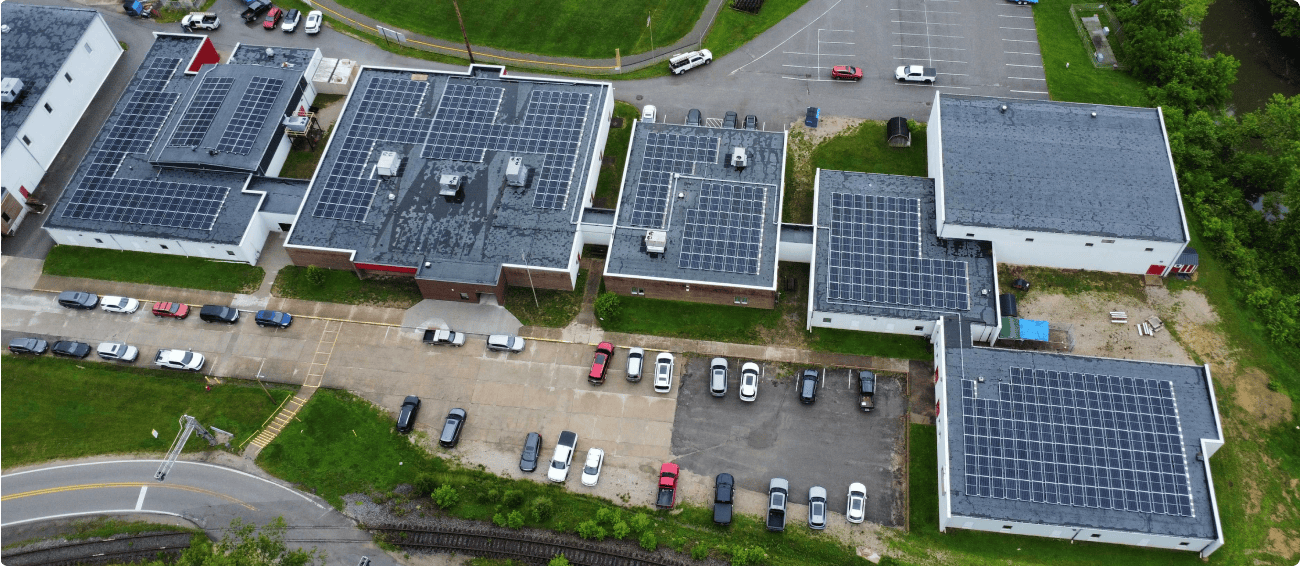
Wayne Middle School, Wayne County Solar Holler site
When renewable energy becomes local, perceptions change
Solar on school rooftops makes renewable energy visible and tangible. The community is experiencing the energy transition firsthand, not as something theoretical happening elsewhere. When people see renewable energy working in their own community, benefiting their own schools, it reshapes what they believe is possible.
“We've done installs for people whose families were coal miners. Once they’ve had their install done and seen how well it works, their perspective changes in a matter of just the install.”

Austin Easterling
Team Lead
Solar Holler
Connecting corporate climate capital to community-scale renewable energy
Wayne County demonstrates how corporate climate commitments can be structured to directly enable community-scale renewable energy projects that traditional financing often overlooks. Nearly 8,000 rural school districts across the United States face similar budget pressures, collectively spending billions of dollars on energy each year that could instead support students and educators.
Ever.green’s approach creates a clear channel for corporate climate dollars to reach projects that deliver impact beyond clean electrons. When corporate buyers, mission-aligned developers, and community needs come together, the result is durable, locally grounded climate action with benefits that extend far beyond the grid.
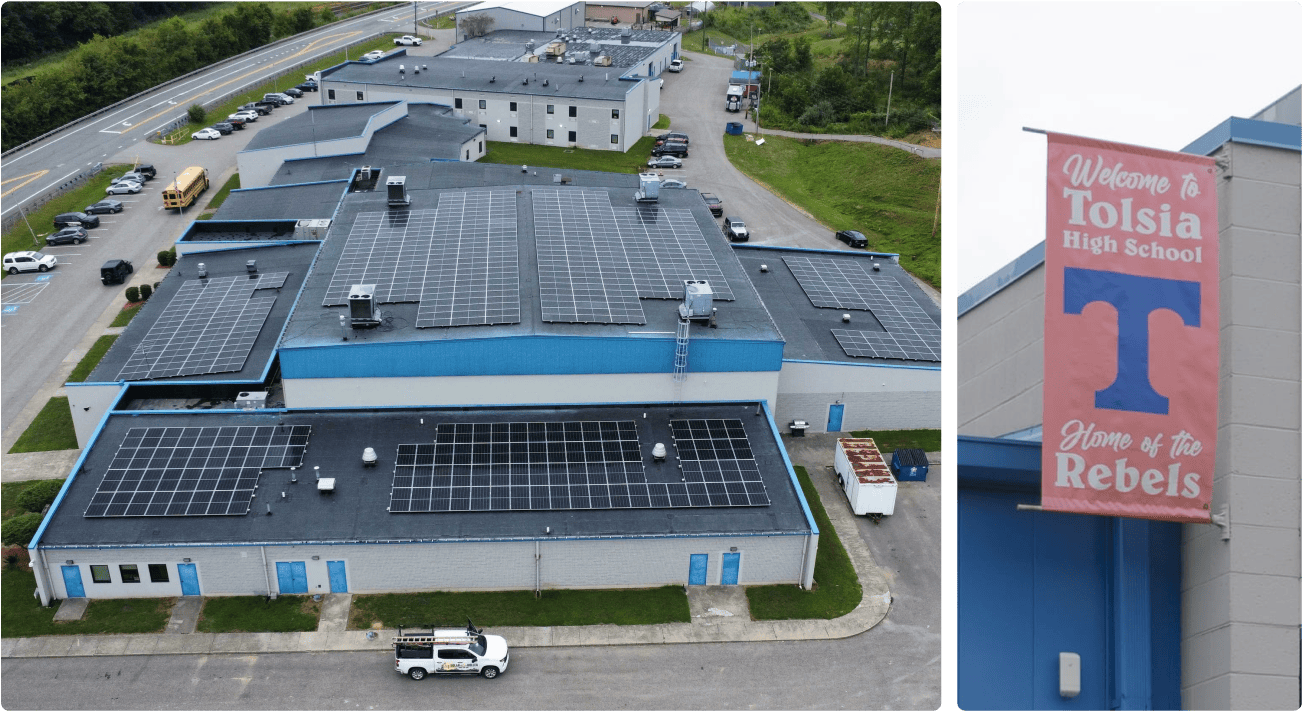
Tolsa High School, Wayne County Solar Holler site
Published: February 2026
Ever.green is the trusted marketplace for High-Impact RECs & clean energy tax credits.
Ever.green’s dedicated team of renewable energy advisors will support you from start to finish to help maximize your team’s impact while minimizing overhead.
Ever.green customer stories
View all
High-Impact RECs

NC

Solar
Baron Solar
Ever.green enabled a cohort of SMB suppliers to meet Microsoft’s Scope 3 and CFE requirements by collectively funding a rural solar project in North Carolina.
View case studyHigh-Impact RECs
SC
Solar
Bishopville Solar
Ever.green helped unlock 28MW of solar power by connecting a mission-driven developer with corporate buyers to unlock long-term revenue needed to finance this project and bring it online.
View case study
High-Impact RECs
Tax Credits
IRA tools
COMPANy


Aligns with: