What SBTi’s Corporate Net-Zero Standard V2.0 Means for Renewable Energy Contracts
SBTi’s updated standard lets long-term contracts signed before February 1, 2027 keep today’s deliverability flexibility. After that date, the same contract has to meet the new regional rules
Oct 13, 2026

Michael Leggett
The Science Based Targets initiative (SBTi) Corporate Net-Zero Standard V2.0 takes effect February 1, 2027. In its executive summary, SBTi says existing contracts “will be grandfathered for the duration of the contract.” The binding legacy clause (C30.5) is narrower. It lets instruments from long-term contracts signed before the effective date be treated as deliverable in the same activity pools (e.g., deliverability regions) they were applied to before.
Why it matters: Long-term contracts signed before February 1, 2027 keep today’s deliverability flexibility under SBTi’s new standard. Sign on February 2 and the same contract has to meet V2.0’s regional deliverability rules. It does not matter when you set your targets, be it in 2027 or 2030.
That leaves about 16 weeks, and long-term contracts take time to negotiate. We have available supply and buyers already working to close before the deadline. But time is running out.
What changed in SBTi V2.0 for renewable energy procurement
The final V2.0 is softer than the November 2025 draft on hourly matching and project age, but it keeps deliverability for everyone and adds two things the GHG Protocol's 2025 Scope 2 proposal does not have: a project-age limit and a settled legacy clause.
Sources: SBTi CNZS V2.0 (2026); SBTi CNZS V2.0 draft 1 and draft 2 (2025); GHG Protocol Scope 2 Public Consultation document (2025), sections 5 to 7.
Pillar 1: Deliverability
Under V2.0, every company must match its electricity use with low-carbon supply from the same deliverability region. There is no company size exemption. A company using electricity in Indianapolis, Indiana can sign a long-term forward contract with a solar farm in eastern Kentucky today and count it toward its targets. Under all three US maps the GHG Protocol has proposed, those sit in different regions. Under V2.0, that contract no longer counts unless it fits an exception.
Think of deliverability as a postal code for your certificates. The address on the REC will have to match the address on the meter.
The exceptions are narrow but useful:
- Transmission rights. Matching can extend to a neighboring region if the company holds, or can show access to, the transmission rights to physically move the power.
- Multi-region PPAs with new projects. A company with operations in two or more interconnected regions on the same synchronous grid can cover that combined load with a single power purchase agreement from any of those regions. The offtake has to start within 36 months of the project’s commissioning. Unbundled RECs don’t qualify, and a Texas project still can’t cover load in the Eastern Interconnection.
- Structural constraints. Where a company can show that enough low-carbon supply can’t be contracted in its region or interconnected regions, it may take sector-level actions. That flexibility lasts only while the constraint persists, and the company must show steps toward new in-region supply.
- Legacy contracts. Instruments from long-term contracts signed before February 1, 2027 can keep counting in the regions they covered before. They must be spread across those regions in proportion to load, and renewing the contract doesn’t extend the protection.
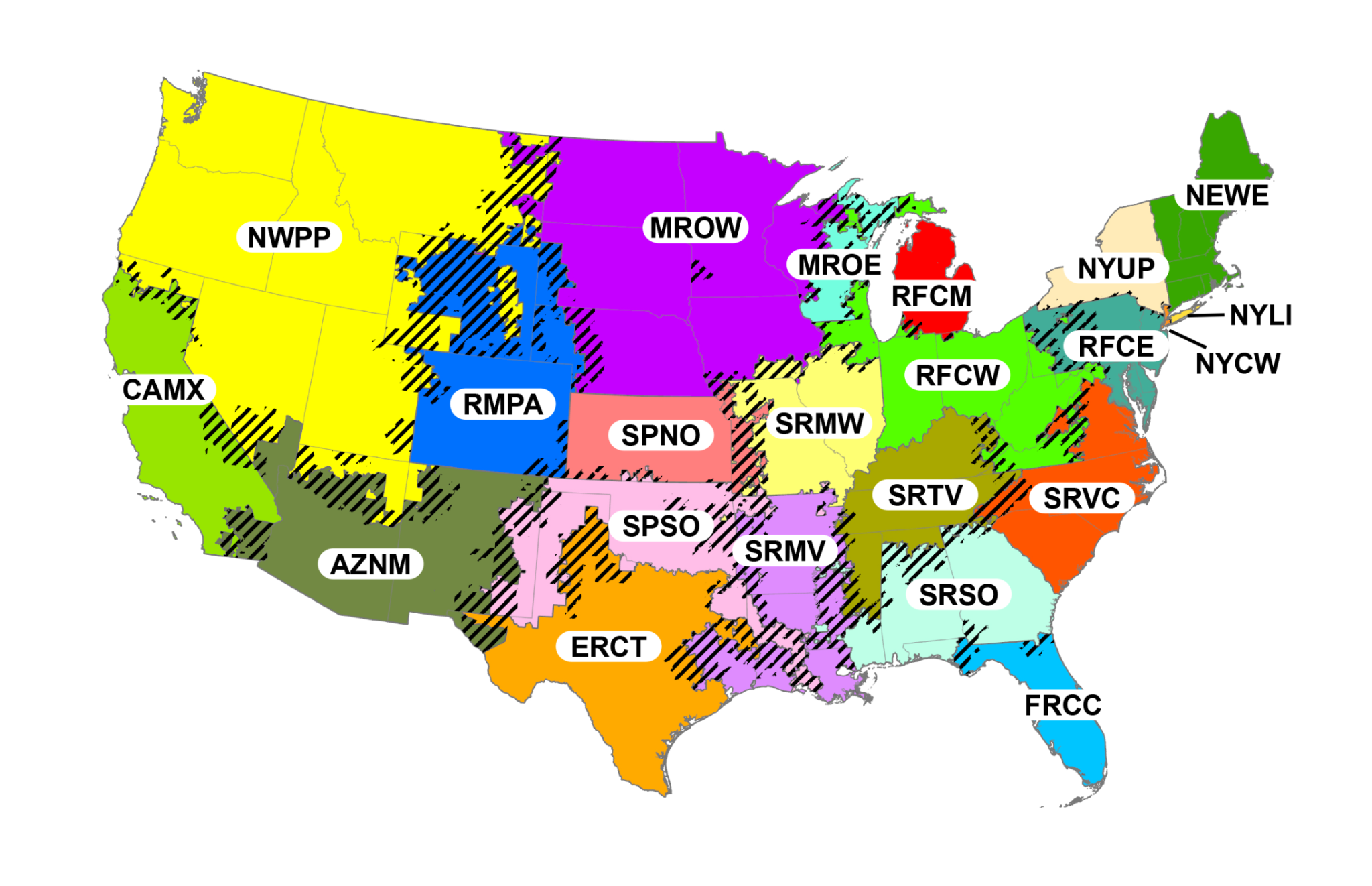
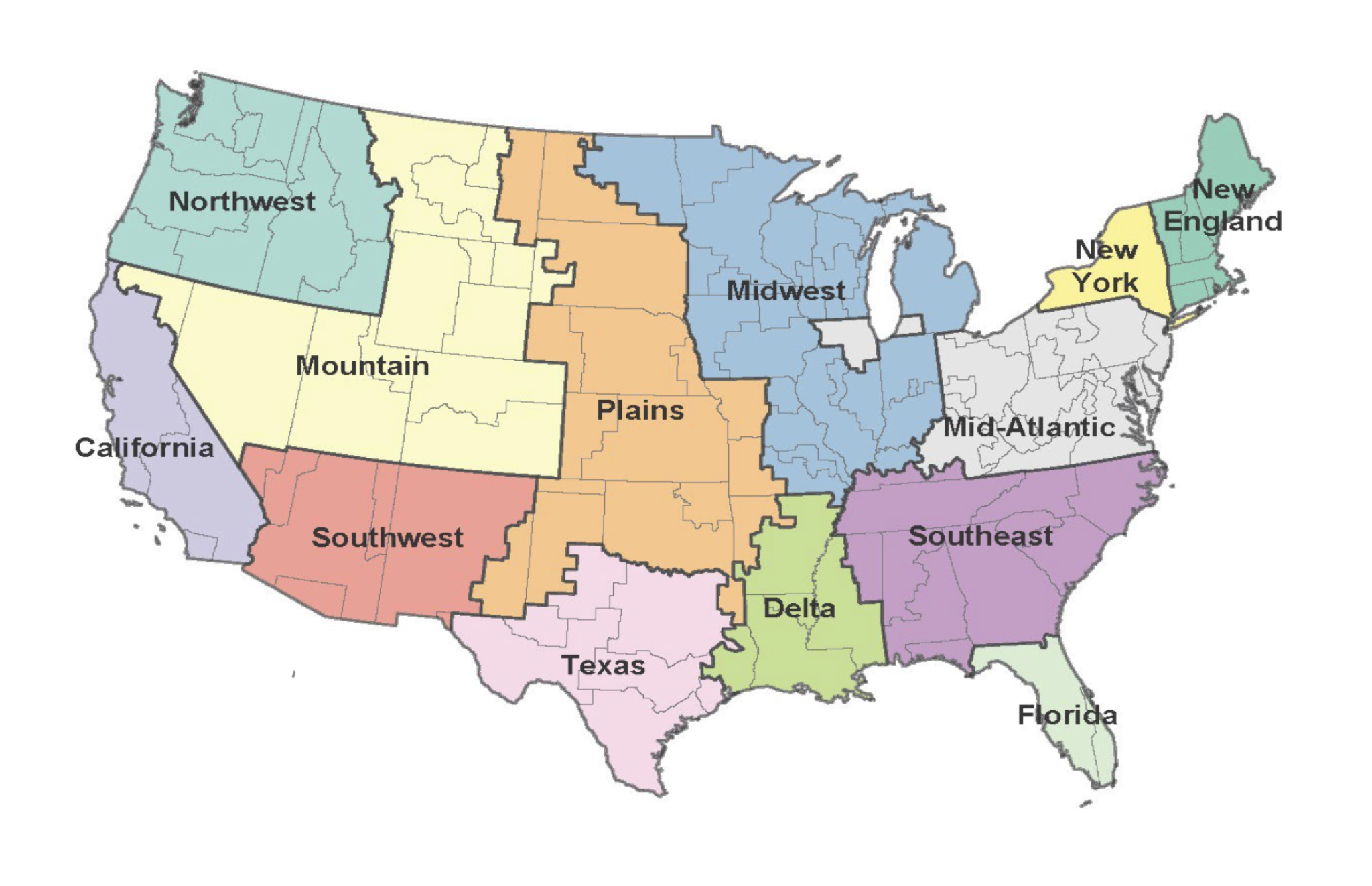
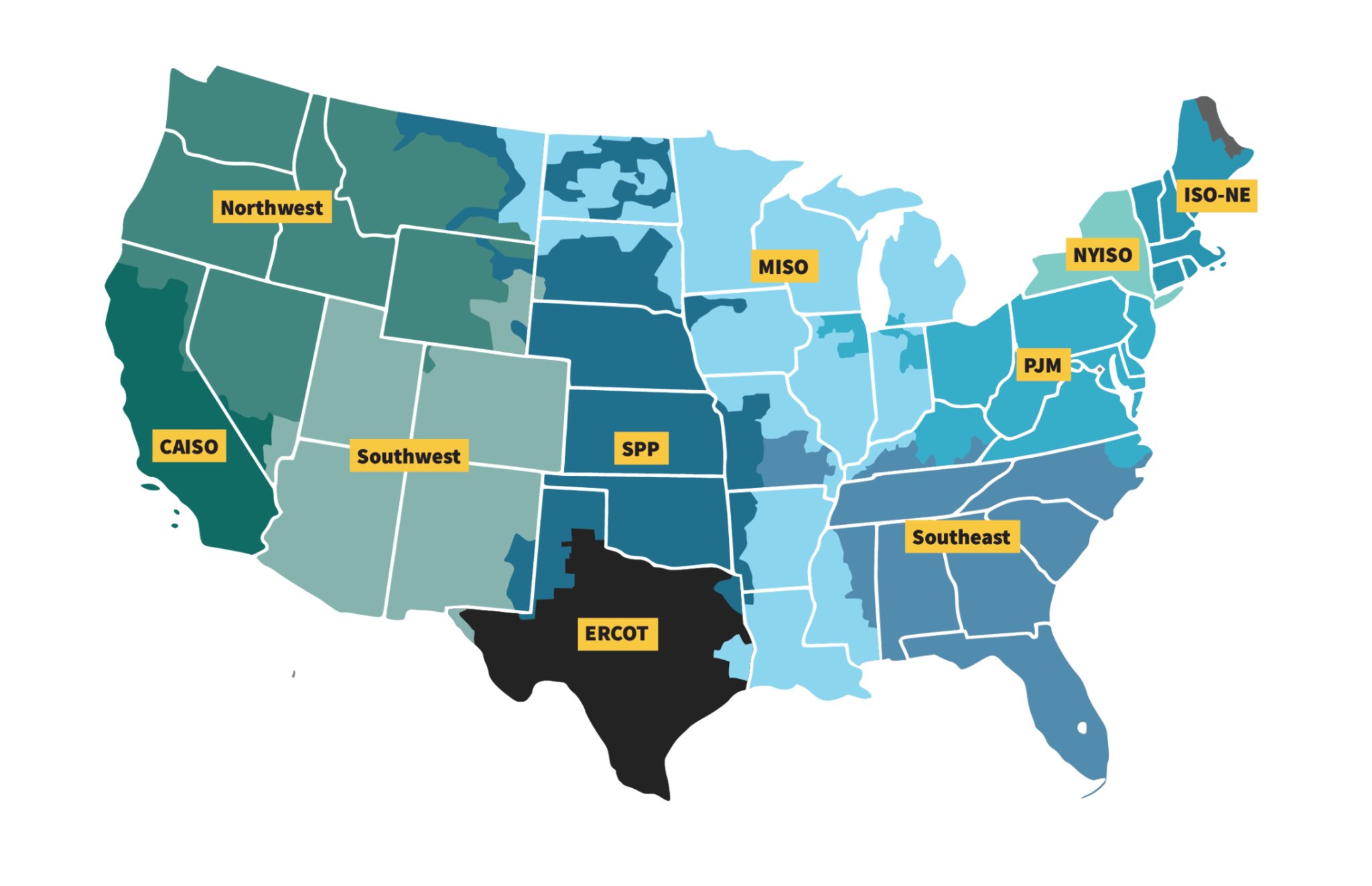
We expect SBTi to use the same deliverability regions as GHG Protocol but they have only promised to revisit its region definitions once the GHG Protocol finishes its revision. The GHG Protocol has not chosen a US map. We expect the final map to draw on one of the maps the GHG Protocol put forward in its 2025 public consultation - see below.
Ever.green continues to advocate for broader regions that reflect where power can flow and allow companies to invest in dirtier regions when their local grid is clean.
GHG Protocol deliverability options:
Option 1: The US EPA’s eGRID map (Emissions & Generation Resource Integrated Database)
Option 2: U.S. DOE Needs Study Regions (45V) map
Option 3: Wholesale market/balancing authority map
Pillar 2: Hourly matching
Hourly matching is not required. Hourly reporting is, for large Category A loads. Category A companies must calculate and report the share of Scope 2 consumption matched hourly in any activity pool with significant use (10 GWh or more a year). For Category B companies it is optional. No company has to set an hourly target. The figure is reported at the end of each five-year target cycle, and Category A companies must have it assured (C32.4).
This is a real retreat from the November 2025 draft, which would have made hourly matching mandatory from 2030 for loads of 10 GWh or more. The final standard swaps the mandate for three things:
- A voluntary recognition program. Companies that hit defined hourly thresholds can be recognized on the SBTi Dashboard. The thresholds are at least 50% until 2030, 75% until 2035, and 90% from 2035. A company has to meet the threshold in every reporting year of its cycle, not on average (C34.1).
- A participation declaration. Every company must say whether it intends to take part in hourly recognition, and explain if not (C33).
- A Call for Evidence. SBTi plans to study how hourly matching should work in a target-setting program, to inform future revisions.
Contrast this with the GHG Protocol. Its 2025 proposal would make hourly matching a condition of the market-based inventory itself, with an exemption below a threshold that has not been set (5, 10 and 50 GWh per region were floated). SBTi's 10 GWh is a reporting trigger. A similar number at the GHG Protocol would be a mandate. Same number, very different consequences.
What this means for you: if you are Category A with a large regional load, you will need hourly data for both consumption and certificates. Every REC we deliver carries a generation timestamp, so we can calculate your hourly match rate by region and give you the evidence trail an assurer will ask for.
What this means for you: if you are Category A with a load of 10 GWh or more in any region, you will need hourly consumption and certificate data in that region for every year of your cycle, not just the last one. Every REC we deliver carries a generation timestamp, so we can calculate your hourly match rate by region and give you the evidence trail an assurer will ask for.
Pillar 3: Project age
Certificates now have to come from projects commissioned or repowered within 15 years of REC vintage. SBTi’s summary says PPAs with projects under 36 months into operation can run longer, but the binding criteria don’t include that exception.
This is the pillar the GHG Protocol is missing. Its 2025 Scope 2 proposal contains no project-age or incrementality test at all. The proposed market-based changes cover hourly matching, deliverability, Standard Supply Service and residual mix. Nothing asks whether the certificate came from a new project.
That gap matters because nearly all the research showing large benefits from hourly matching assumes the contracted generators are new. Xu et al. (Joule, 2024) and Riepin and Brown (2024) both build that in as a constraint. They model a best case the GHG Protocol draft does not require. Gagnon and Brown are the exception. They model pooled certificates with no new-resource requirement, closer to the rules as drafted. When incumbent generators can fill the pool, matching’s advantage sharply narrows.
SBTi got the direction right. Where 36 months does appear in the binding text is the multi-region exception: only PPAs whose offtake starts within 36 months of commissioning can cover load across regions. We think that is the most important line in the scope 2 section. It favors contracts with new projects, and the earliest of those, signed before construction, are the ones that actually move financing. The general limit should be tighter, closer to the 3-year standard used for US 45V clean hydrogen credit. But 15 years is better than no limit at all.
What this means for you: check each contracted project’s commissioning date against the life of the contract. New projects give you the most years of eligibility. Sign before February 1 and you also keep today’s deliverability flexibility. Renewing a legacy contract won’t extend that protection, so treat renewals as new contracts.
Bonus: Auditability
Every certificate used toward a target must be issued, transferred, redeemed, cancelled and retired through a transparent, secure registry that prevents double counting. That applies to all companies. Category A companies also need at least limited third-party assurance of their base-year inventory, including the low-carbon electricity calculation, and an assured progress assessment at the end of each five-year cycle. That assurance has to verify that each certificate met the eligibility rules (C28.2) and covers the hourly matching percentage for companies that report one (C32.4).
In practice, you should be able to trace each claimed MWh back to a registry record or proof of retirement, a contract, a project commissioning date, a region and, for hourly reporters, an hour of generation. A spreadsheet total will not survive that. A clean chain of custody will.
What this means for you: keep registry retirement records, contract terms and project details together from day one. If you hold long-term contracts signed before February 1, 2027, also document which regions you’ve applied them to. That history decides where legacy deliverability applies. We deliver RECs with that documentation attached.
What is clear and what is still open
Clear:
- SBTi’s CNZS V2.0 is final and takes effect February 1, 2027.
- Deliverability applies to every company and every certificate, except those from long-term contracts signed before February 1, 2027.
- Hourly matching is not required, but instead simply disclosed (by Category A companies in regions using 10 GWh or more).
- Project age: Projects must have been commissioned or repowered within 15 years of the electricity use they cover.
Several questions remain open:
- The US deliverability map. Until the GHG Protocol settles its regions, buyers cannot know exactly which of today's contracts would qualify on their own.
- What counts as "long-term." The standard doesn’t define a minimum term for “long-term.” Unbundled spot REC purchases are unlikely to qualify.
- How the GHG Protocol treats the same contracts. SBTi requires inventories to follow the GHG Protocol. The GHG Protocol's own legacy clause is still under consideration, including which date sets eligibility, and it is weighing a single effective date with a lead time instead. SBTi says it will consider targeted amendments once the GHG Protocol revision concludes. If the GHG Protocol doesn’t grandfather the same contract, it could count toward your SBTi low-carbon electricity share without reducing your market-based scope 2 emissions.
- How far the legacy clause reaches. SBTi’s summary says existing contracts won’t need to meet new requirements, but the binding text covers deliverability only. We do not expect older projects in legacy contracts to escape the 15-year limit, but it is not clear. “Load-weighted” allocation across regions isn’t defined either.
- The multi-region exception. Whether the multi-region exception covers aggregated deals across buyers, or long-term REC offtakes with new projects. As written, it covers one company’s load under a power purchase agreement.
- Hourly recognition details. SBTi's Call for Evidence could reshape the hourly approach in a future revision.
None of these open questions changes the February 1 date. Grandfathered deliverability is the one firm protection buyers have, and it has an expiry date.
The window closes February 1, 2027
A long-term contract signed before February 1 keeps today’s deliverability flexibility for its full term. RECs contracted after that date must meet V2.0’s regional rules, whether you move to V2.0 in 2027 or 2030. Long-term contracts take months to negotiate, so the practical deadline is well before February.
We are not urging buyers to lock in the status quo. We are urging them to do the one thing that holds up under every version of these rules: sign forward contracts that help new projects get built. Signed now, those contracts count under today’s rules and, for new projects in your region, keep counting under tomorrow’s for up to 15 years.
What sustainability teams should do before February 1, 2027
- List your current and planned renewable energy contracts with signing date, term length, project commissioning date, the region of both the project and your load, and which regions you’ve applied each contract to so far.
- Ask your advisor whether each structure qualifies as “long-term” under the legacy clause. Don’t count on renewals, which do not extend legacy deliverability.
- Decide whether a forward contract for a new project fits your procurement plan, and begin negotiating now.
- Ask every provider for registry retirement records, generation timestamps, and project commissioning dates.
If you want to be under contract by February 1, 2027, talk to our team this month. We have supply available and buyers already working toward the cutoff.
Get the latest insights on
High-Impact RECs and transferable
tax credits
Related posts



High-Impact RECs
Tax Credits
IRA tools
COMPANy


Aligns with: